Her life took a turn she had not foreseen. Surviving, and leaving behind, the visual memories of the war, she thought she would never again feel the darkness of life closing in around her. During the long boat ride to America, she had imagined so many things. Dreamed more dreams than her childhood had been the foundation for. Her head was in the clouds, pulling her heart along.
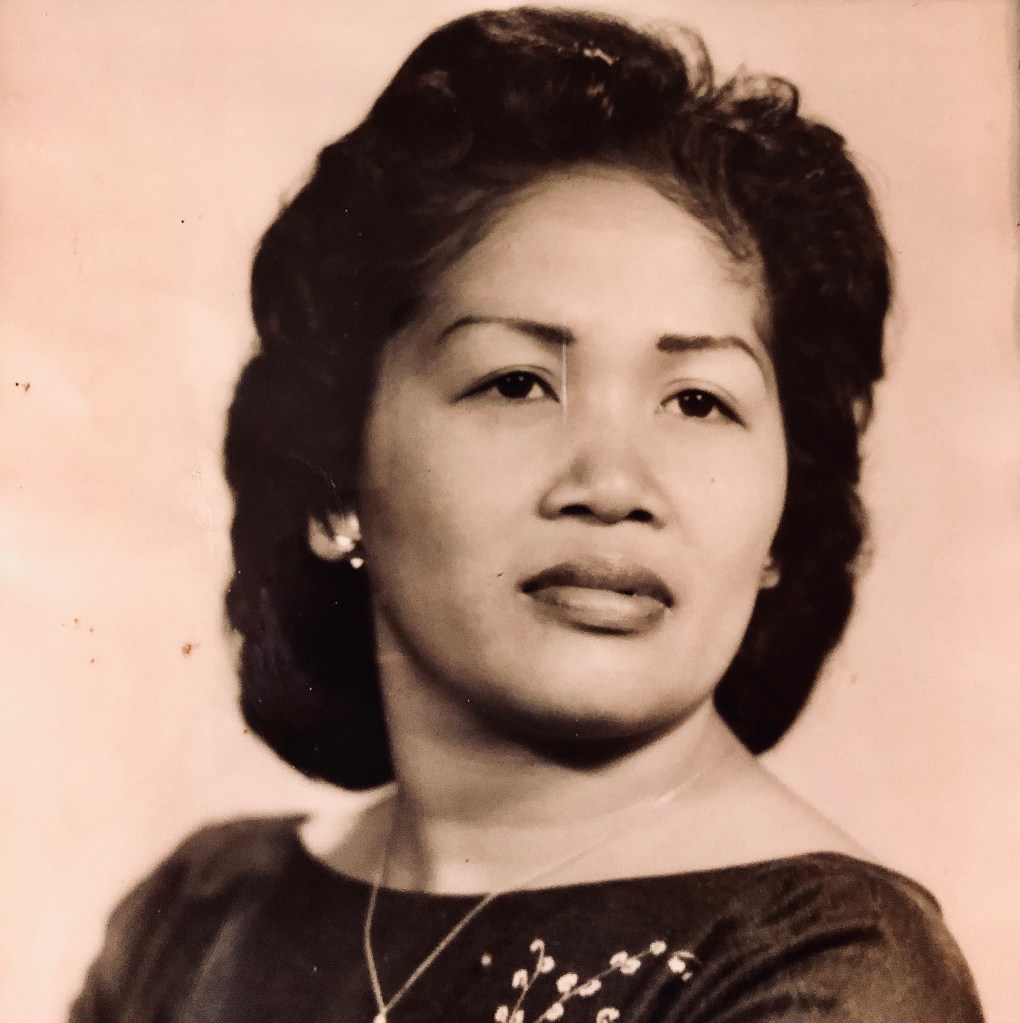
And for a while, it was all that she imagined, and more. When she dreamed of America, she thought of bright sunshine, tall buildings, and loving families, living in homes filled with laughter. In her mind, she saw the movie version of the American way of life. Her reality came pretty close to her dream. She laughed with and loved her children, and all the new found friends who didn’t seem to care that she was different from them. Then, one day, standing with her children on a street corner, waiting for a bus, she saw another small woman with children. In that woman’s face she saw the unmistakable traits of a Filipina.
They spoke. As was the custom, back when the transplanted Filipino community was fractured, when two Filipinos met they would share family histories. A matching last name, regardless of how far deep into the roots of the family tree, meant family. My mom had found a cousin. And through her cousin she met other cousins, aunts and uncles. Her life was complete.
But her heart was feeling heavy. Having her Filipino family in her life was more than she had ever dared to dream, but having more kids than she really wanted was becoming a heavy burden. With a newborn and the oldest being 7, a husband never home, she was afraid she was taking on more than she could carry. Everyday her joys were diminishing as a new darkness was enveloping her.
In todays terms, she would have undoubtedly been diagnosed as suffering from PTSD from the trauma of her childhood. But with the compounding issues of her culture and how it grapples with mental health, and the lack of concern for mental health in 1960’s America, she was left to suffer in silence and isolation.
She didn’t have the fight it took to defeat the darkness. She was heart tired. She loved her children, she knew that, but that love was moving beyond her reach. Giving them care took no real thought. It was what she, and every other Filipino girl, was born to do. Care for the family. But what she was doing and what she wanted to do were two totally different things.
She wanted more control of her life. She wanted to raise her children, but she didn’t want to do that alone. She wanted to take of everyone, including herself. She was looking forward to when all of her children would be in school and she would have time for herself. But, like every other major event in her life, she had to push her needs to the furthest corners of her mind. Before her youngest child turned two, she found she was pregnant. Again.
She had nothing left for this child. This daughter would be the proverbial straw, but it wasn’t her back that broke. It was her heart. It ceased to function. As hard as she tried to dig deep and find something to invest in this new life, she came to know more and more how depleted she was.
And if her life had not merely been steps from one challenge to another, she faced her greatest test. And failed. She had touched the limits to her ability to love. And all the love she felt collapsed on itself. Knowing love was a finite element of life was as destabilizing as the situation that exposed her limitations. For a time, guilt was all she was, all she felt.
The darkness became real. She existed as a black hole. All the love her children had for her was poured into her only in the way children can do. Love, tempered with innocence and truth. Her heart had become a bottomless pit of need. Eventually, she was buoyed by their devotion and could again share the joys of life and living. Except with the youngest. The door had closed on those feelings, never to be uncovered or freed.
 Ignite Life
Leave a comment